⚠️ HEALTH ALERT: New Research Reveals Hidden Cause of Neuropathy in Feet
Burning feet at night? What It May Be Signaling
Because what starts as burning at night often turns into balance loss, falls, and loss of independence — if ignored

▶ Watch: Learn how nerve communication changes
That’s when balance becomes a risk.
One wrong step. One wet floor. One fall that changes everything — hips, head, independence, freedom.
Most people don’t lose their independence from pain. They lose it from what comes after the pain goes quiet.
Why Burning Sensations at Night Shouldn’t Be Ignored
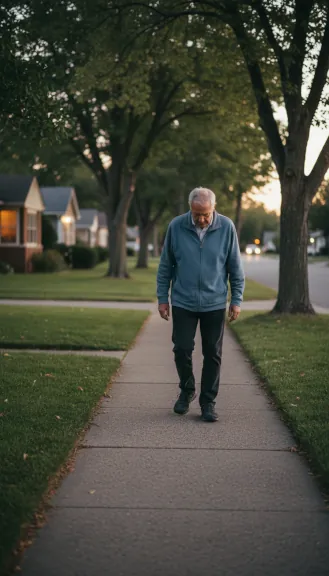
The real danger isn’t the burning.
It’s what often comes after.
When the fire starts to fade, many people feel relief.
They think the worst is over.
But for a lot of people, that quiet isn’t healing.
It’s the moment the signal starts to fail.
Balance becomes uncertain.
You start watching the floor instead of trusting it.
Simple movements require attention. Curbs feel higher. Stairs feel narrower.
This is how independence erodes — not all at once, but step by step.
Not with a dramatic warning, but with small moments of hesitation.
Falls don’t usually come out of nowhere.
They build quietly, when communication weakens and the body stops giving clear feedback.
And the most unsettling part?
This progression often happens at night, while you sleep — when you’re not doing anything wrong, and not doing anything to stop it either.
When Changes in Sensation Start Affecting Stability

Dr. Neal Schultz had spent most of his career helping people manage neuropathy.
He followed the guidelines.
He gave the explanations he had been trained to give.
And for years, he believed that was the best anyone could do.
Until neuropathy reached his own feet.
At 2 a.m., the burning became so intense he had to hang his legs off the side of the bed just to tolerate it.
But the moment that truly shook him didn’t happen in a clinic.
It happened in his backyard.
His five-year-old granddaughter asked him to chase her across the grass.
And for the first time, he had to say no.
Not because he was tired.
But because he couldn’t trust his own feet to respond the way they should.
That was the moment something broke for him — not physically, but professionally.
If he was giving patients answers he himself couldn’t live with…
what was he missing?
That question sent him down a different path.
Not looking for ways to cope — but looking for what had been overlooked.
What’s Really Happening With Nerve Communication
For years, neuropathy has been explained as something passive.
Aging. Wear and tear.
Something that simply “happens” to the nerves over time.
But what Dr. Neal uncovered suggested something very different.
In many cases, the problem isn’t that the nerve is slowly dying.
It’s that its protective system is breaking down — leaving the signal exposed.
Think again of an electrical wire.
As long as the insulation is intact, the signal flows normally.
But once that protection starts to erode, the signal becomes unstable.
That’s when the system begins to misfire.
The burning sensations.
The pins and needles.
The sudden shocks.
And eventually, the numbness.
The pain isn’t random.
It’s the nervous system reacting to exposed, unprotected signaling.
And when that signaling weakens enough, the brain stops receiving clear feedback from the feet.
That’s when balance suffers.
That’s when silence becomes dangerous.
This isn’t about “living with it.”
It’s about understanding what’s breaking down — before it progresses further.
For readers interested in the scientific background behind this process: View the published research
Living with neuropathy isn’t just physical.

Living with neuropathy isn’t just physical.
It’s the constant mental effort before every step — the hesitation at curbs, the extra attention in dark rooms, the way nights feel heavier than days.
It’s the frustration when someone tells you to “just live with it.”
The quiet embarrassment of not keeping up.
The private fear of what a single fall could change.
And perhaps the hardest part is this: missing the version of yourself who didn’t have to think about walking.
Confident. Independent. Free to move without second-guessing your own body.
If any of this feels familiar, it doesn’t mean you’re weak.
It means you’re paying attention.
Your concern isn’t an overreaction.
It’s a natural response to uncertainty — and a signal that something important deserves to be understood.
Common Patterns People Notice Before Balance Declines
Before balance and stability noticeably decline, the body usually sends signals.
These aren’t diagnoses.
They’re patterns many people begin to notice over time.
See how many of these feel familiar to you:
Burning sensations in the feet, especially at night
Tingling or “pins-and-needles” that come and go
Areas of numbness that seem to slowly expand
Feeling less steady, or watching the ground more while walking
Sudden electric-like sensations
Weakness that makes stairs or uneven surfaces more challenging
If you recognize several of these, it may indicate an underlying disruption in nerve communication — not something to ignore, but something worth understanding.
Experiences From People With Similar Symptoms

Sarah M., 67
"Every night felt the same — burning feet, poor sleep, and waking up exhausted. What scared me most wasn’t the pain, but the feeling that my body was slowly slipping out of control.Once I understood what was actually disrupting nerve communication, things began to change. Within weeks, the burning eased and my nights became calmer again"

Robert P., 65
“The burning in my feet always got worse at night. At first, I thought it was just discomfort. But when I started feeling unsteady walking down the hallway, I got scared. After learning what was really happening with my nerves and following this approach, I noticed something unexpected — my balance slowly started coming back. Today, I walk confidently again and no longer fear falling every time I get up at night.”

Jonh W., 65
“I ignored the burning sensation for years. Then one day, I almost fell getting out of bed. That’s when I realized this wasn’t ‘normal aging.’This information completely changed how I approached my nerve health. Now, I move with confidence again — and I don’t rely on anyone to feel safe in my own home.”

Carol H., 69
“The tingling and burning were annoying, but manageable — until my balance started failing. I was afraid of becoming one of those people who needed help just to walk.After applying what I learned here, my stability improved gradually, and that constant fear faded. Getting my confidence back has been life-changing.”
Real Stories from People Who Found Relief
Is this method safe? Are there side effects?
It’s a simple daily approach focused on supporting nerve communication — without pills or stimulants.
I have severe diabetic neuropathy. Can this really work for me?
This discovery was specifically aimed at addressing the root cause behind even severe cases of nerve discomfort. The video explains the science behind why it can be so effective, even if other methods have failed you.
How quickly can I expect to see results?
While everyone is different, many people report noticing a significant difference in their comfort and mobility within the first couple of weeks, with continued improvement over time.